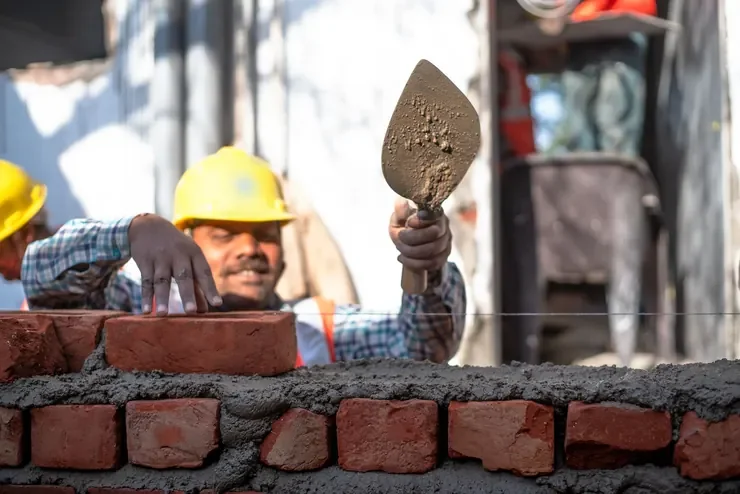
Masonry in AAC block, cotileț, brick and ceramic block
We do AAC block, cotileț and brick masonry for new houses, extensions and attic storeys: external and internal walls, straight and level, with lintels over the openings. We work in Chișinău and across Moldova, with your materials or ours.
Leave a request
The data is processed in line with the privacy policy.
What we build
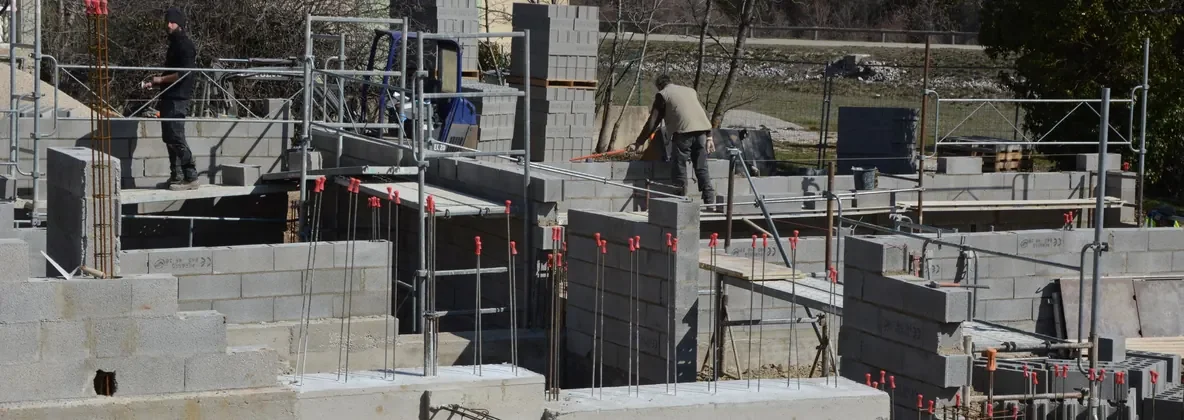
Each material has its own adhesive or mortar and its own pace. We build outside walls, inside walls and gables, on a prepared foundation or slab.
AAC block
Aerated concrete blocks on adhesive, with thin joints; the fastest wall to build. The first course goes on mortar, level, and the rest is laid with AAC adhesive.
Cotileț
Limestone blocks on cement mortar, fitted one by one. We set aside broken or overly soft blocks, which have no place in load-bearing walls.
Brick
Solid brick on mortar, for load-bearing walls, plinths and exposed facades. It is the slowest masonry, and the strongest.
Ceramic block
Large hollow blocks on mortar or adhesive, as the manufacturer specifies. A wall one block thick comes out warm and goes up quickly.
Masonry prices
All pricesMasonry is labour: AAC, cotileț and brick per m³, ceramic blocks per m² of wall.
| Work | Unit | Price from |
|---|---|---|
| AAC block masonrylabour, on adhesive | m³ | 500 lei |
| Cotileț stone masonrylabour, on mortar | m³ | 500 lei |
| Brick masonrylabour, on mortar | m³ | 800 lei |
| Ceramic block masonrylabour | m² | 170 lei |
A house is priced per m² of built area, materials and labour included. Separate jobs are priced for labour: you buy the materials, or we bring them at the price on the receipt. The exact amount goes into the stage-by-stage estimate once we have seen the design, the plot and the soil.
What makes good masonry
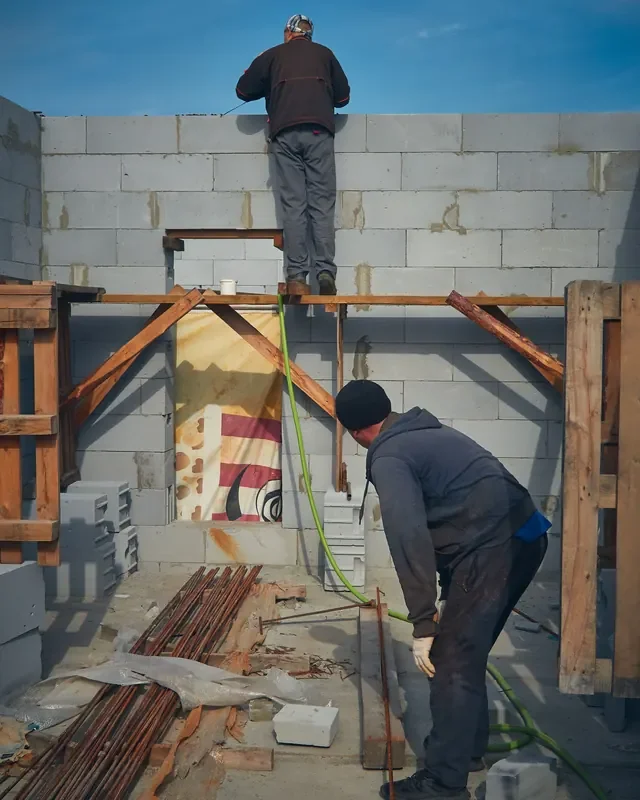
The first course goes on mortar, perfectly level: every course above depends on it. The corners go up first, and the rest of the wall follows a string line. We check the plumb with a level every few courses, not just at the end, because a crooked wall can later be straightened only with thick plaster.
Lintels go over windows and doors, and a reinforced concrete ring beam over every storey; on the ring beams comes the concrete floor slab. Where the design calls for it, we also lay reinforcement in the joints. If you have not chosen a material yet, compare AAC block houses with brick ones.
Masonry, course by course
The steps are the same for every material; only the pace differs.
We measure
We check the foundation or slab, the lines and the levels in the design. If a foundation poured by another crew is out of level, we take up the difference in the first mortar course.
First course
We lay the first course on mortar, over the damp-proof layer, level. We carry on with the next courses once the mortar has set.
Walls
We raise the corners, then the walls, with openings for doors and windows. Inner load-bearing walls are tied into the outside walls so they work together.
Lintels and ring beam
We set the lintels and prepare the formwork for the ring beam. Once the ring beam is poured, the storey is ready for the slab or the roof.
Frequently asked questions
Do you only build with your own materials?
Both yours and ours. If you bring the material, you pay for labour only; if we bring it, it goes into the estimate at the price on the receipt. We tell you in advance how many m³ of blocks and how many bags of adhesive or cement you need, so you do not overbuy.
How long does the masonry of a house take?
Usually two to three weeks for the walls of one storey of a 100-150 m² house. The timing depends on the material and the number of openings: AAC is the fastest, solid brick the slowest.
How is masonry measured in cubic metres?
The length of the wall times its height and thickness, minus the openings for doors and windows. Ceramic blocks are counted per m² of wall, without the thickness.
Need bricklayers?
Tell us the material and the rough volume and we give you the price and the timing. Masonry is the middle part of any house construction.